Why Does Your Car Keep Getting Stuck in Mud After Heavy Rain?
At 7 a.m., after an overnight downpour, a gravel drive can look normal while the soil beneath it has turned soft. At Miles Towing Service, we help Philadelphia, PA drivers whose vehicles become stuck in muddy driveways, gravel roads, and waterlogged parking areas that were perfectly passable the day before. A winch out can keep a small slip from becoming a deeper hole. When the wheels start digging, controlled recovery equipment matters. Our crew works out a safe way to pull the vehicle free.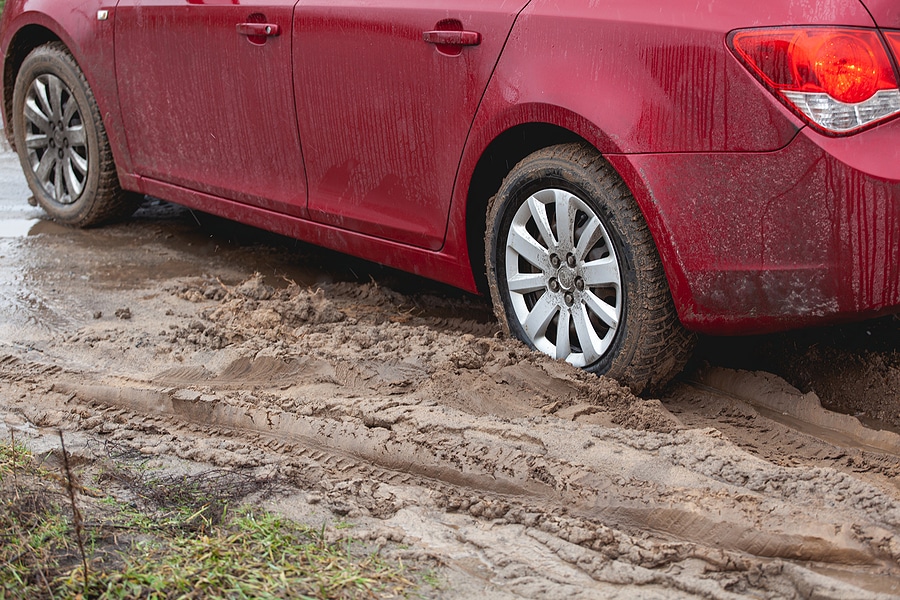
Heavy Rain Changes How the Ground Holds Your Vehicle
On a homeowner’s gravel drive, the top layer may stay firm enough to walk on while water weakens the ground below. Drivers often tell us they crossed the same spot earlier that day. Then, after another hour of rain, they find the tires sliding. Cars and trucks need solid footing beneath the tread. Once water fills the spaces in the soil, mud can no longer carry the vehicle’s weight well.
- Waterlogged soil: Saturated ground can give way under a vehicle, even at low speed.
- Hidden ruts: Water gathers in old tire tracks and can tug a wheel to one side.
- Loose surfaces: Washed-out stone and dirt may shift the moment you press the gas.
What Should I Do When My Car Is Stuck in Mud?
At the first sign of wheel spin, take your foot off the accelerator. More throttle usually cuts ruts deeper and packs mud around the tires. Keep passengers and bystanders a safe distance from the vehicle and recovery equipment while our team works. Spinning tires throw mud, heat up parts, and can leave the vehicle sitting on its frame.
- Stay put: Keep the vehicle still instead of rocking it back and forth.
- Clear the area: Leave space around the vehicle and along the planned pull path.
- Call our crew: We check the ground and recovery points before attaching the gear.
Our Controlled Vehicle Recovery Gets You Moving Again
With a sedan angled toward a drainage ditch or an SUV buried to the lower sidewall, the pull direction makes a real difference. Once our crew arrives, we look at the vehicle’s position, nearby obstacles, and the firmest route out. We attach equipment at an appropriate recovery point. Then we use steady force rather than a hard jerk. If the vehicle isn’t safe to drive after recovery, our towing service can transport it to a repair shop or your home. We also provide roadside assistance for flat tires, dead batteries, and vehicle lockouts.
- Careful setup: Ground conditions, slope, trees, curbs, and available room all shape the plan.
- Steady recovery: Controlled pulling beats sudden jerks.
- Next steps: After the vehicle is free, it can either continue on or be transported.
After 20 minutes of tire spinning, what started as a wet patch can turn into a repair bill and a long wait in the rain. At Miles Towing Service, we bring recovery equipment and experienced hands for the job in front of us. Across Philadelphia, PA, we’re ready to get you back onto firmer ground. Call us at (215) 783-6919 or contact us to get started.